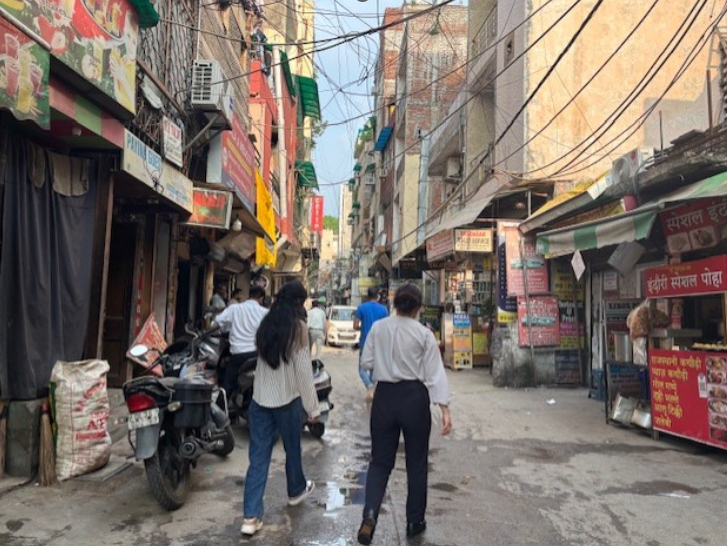
The JP-MIRAI Secretariat visited India (Delhi and Bengaluru) from July 15 to 18, 2025 to exchange views with the federal government, sending agencies, and international organizations on the current situation and challenges of sending human resources to Japan.
Sending and Receiving Situation in India
According to data from the Immigration Bureau (December 2024), the number of Indian workers in Japan is 1,023 for technical training, 404 for specified skills, and 13,619 for technical, humanities, and international services. Although the total number is still small, the growth rate is among the highest in major countries, and there is much room for further increase. Culturally diverse, India is divided into three major regions: Northern India, Northeastern India, and Southern India, each with its own unique human resources.
In India, the Ministry of External Affairs (MEA) is in charge of the Specified Skill System and the Ministry of Skill Development and Entrepreneurship (MSDE) is in charge of the Technical Training System. The organizations sending workers to Japan include (1) 23 private sector sending organizations and (2) NSDCI, each of which has its own characteristics in terms of target states and fields, training methods, and costs borne by the workers.
(1) Private Sending Agencies
As of July 2013, there were 23 agencies that have been accredited for sending out workers to Japan. We visited and interviewed four of them. The recruitment fees and related costs borne by the applicant varied from zero to 400,000 yen. Some institutions, mainly in the northeastern region, receive full payment of the recruitment fee and related costs from the state government to a certain subsidy or grant, and some institutions in the nursing care sector reduce the cost burden by utilizing the free education system provided by NISD (National Institute for State School of Nursing Care).
NSDCI (NSDC International)
An outbound agency operated by a subsidiary of NSDC (National Skill Development Corporation of India) (49% owned by the Indian government and 51% by the private sector). According to the explanation, the government bears some of the costs as a social welfare program to counter unemployment among young people, so technical intern trainees can go to Japan at a lower cost than those sent by private organizations.
Interview with MEA (OE & PG) (Ministry of Foreign Affairs, Overseas Employment and Immigration Protection)
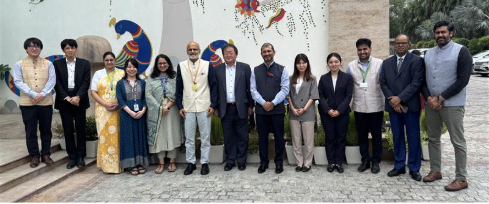
They met with Mr. Surinder Bhaget, Joint Secretary, and others. The Indian government, in light of the Japan-India Summit, expressed its desire to promote the export of human resources to Japan, especially from the northeastern region of the country. JP-MIRAI introduced the ” JP-MIRAI Portal. We would like to collaborate with them, including through social networking services,” said JP-MIRAI’s representative. The participants also expressed strong interest in fair and ethical recruiting (FERI) to enhance the brand of India’s sending companies, and confirmed that they would like to cooperate with FERI in the future.
JP-MIRAI holds regular on-site academies with JP-MIRAI members to deepen understanding of sending countries. The next one, scheduled for November 2025, will be in India, visiting Delhi and Nagaland. For more information, please contact the Secretariat.