One of the most frequently asked questions regarding the proper acceptance of foreign workers is the importance of communication.
Good communication has immeasurable benefits, not only in facilitating work, but also in increasing motivation, fostering a sense of security, building mutual trust, and reducing psychological stress.
However, many people in the field say, “I hear that communication is important, but I don’t know what exactly I should do,” or “I am not sure how to deal with people who are not very good at Japanese.
In this issue, we will introduce some of the initiatives actually being implemented in the field to bring foreign workers and companies closer together.
Building trust through sharing our corporate philosophy of “Respect for People
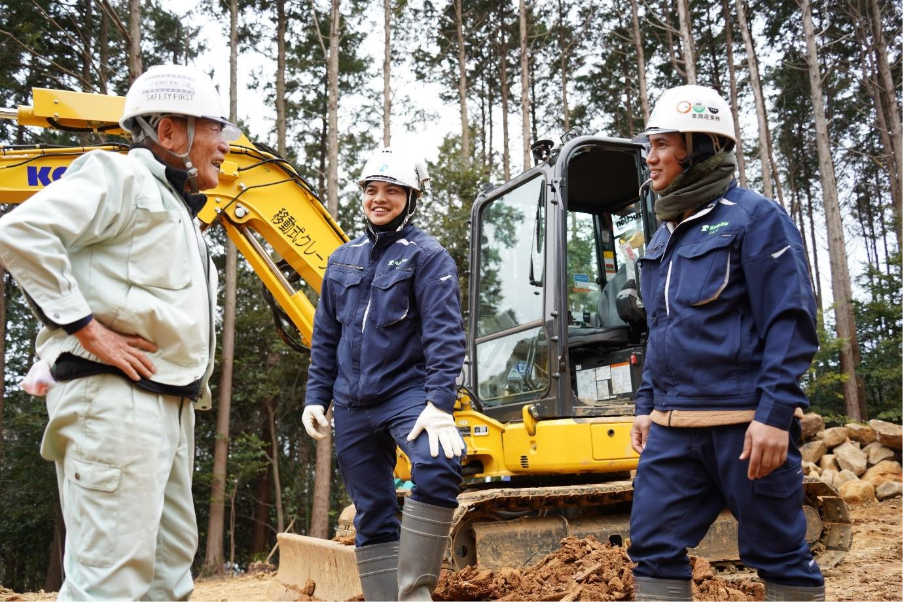
Toko Sangyo Corporation (Civil Engineering and Construction/Technical Internship)
Once a month, the technical intern trainees visit each department to greet each other and ensure that they have a chance to see each other.
Monthly interviews with the individual to help him or her think about his or her goals for the future helped to increase motivation.
After attending a training course by an outside instructor on cross-cultural communication, both Japanese and non-Japanese employees began smiling and conversing with each other, and the relationship between Japanese and non-Japanese employees improved greatly. In particular, Japanese employees have developed a sense of being role models for foreign workers, and have taken the initiative in greeting, cleaning, and obeying rules, which has greatly improved workplace discipline and atmosphere.
Promoting internal communication through human resource development training
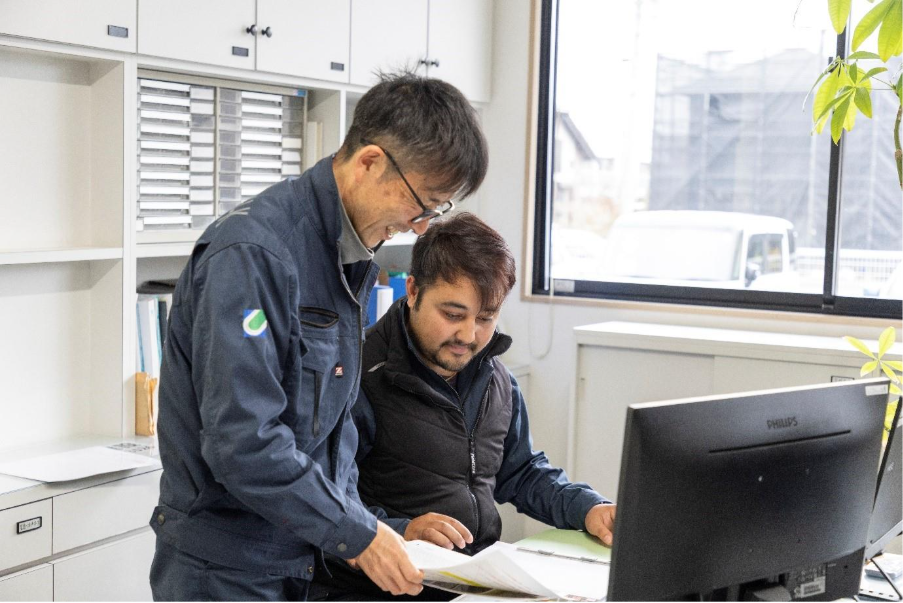
Uematsu Corporation (Construction/Highly Skilled Personnel)
New employees are interviewed by the president four times a year. From the perspective of leveraging the results for mutual growth, we ask them to evaluate themselves as well as their seniors and the company to build a foundation for building a relationship of trust.
The “Mentor Training” program, which was introduced for the purpose of human resource development, also selects non-Japanese employees to participate in the company’s organizational development. Through “team building training” for all employees, which has been conducted multiple times for multicultural understanding, the awareness not only toward foreigners but also toward Japanese people has changed, and employees’ awareness toward understanding others has been improved through the training.
Building trust with a shared vision for the future
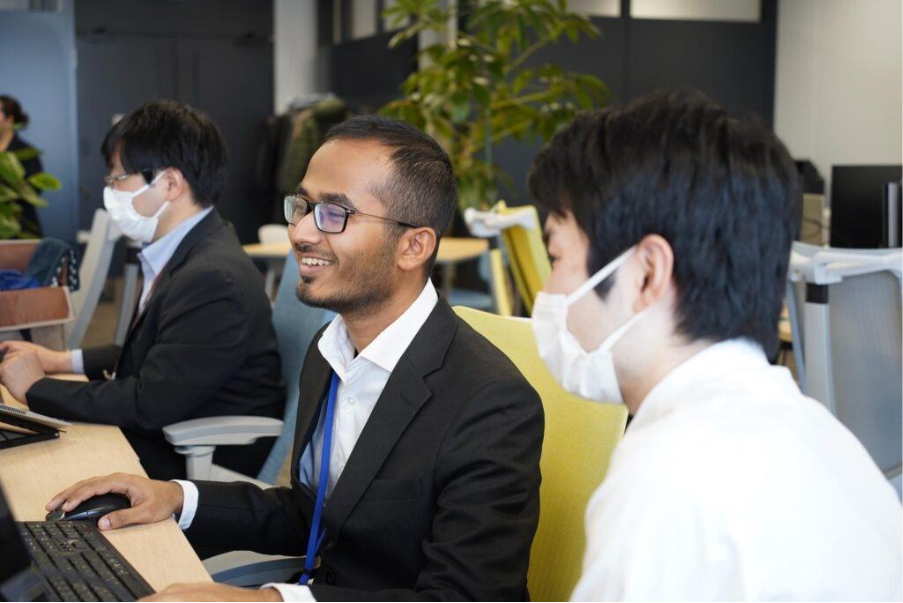
D-SOL NSP Corporation (IT/Highly Skilled Personnel)
Although retention of foreign employees is an issue, we have heard from Mr. Tanvir that he would like to contribute to his home country in the future, and he shared that he is considering the development of a Bangladesh branch in the future.
The skills presentation by Ms. Tanvir also provided an opportunity for Japanese employees to learn new knowledge and promoted mutual communication.
We communicated with them by e-mail prior to their arrival in Japan to ensure that they could come to Japan with peace of mind.
After the interview
Communication, again, have we ever had someone tell us specifically how to do this? We may have assumed that if we did not speak the same language, we could not communicate because of this.
What became clear through the interviews was that what is important is the desire to communicate and the desire to receive. The joy that is generated at the moment these feelings are communicated has a positive effect. That joy spreads throughout the workplace, deepening trust and brightening the atmosphere, further strengthening the team. I felt that empathy for that joy leads to joy as a human being, regardless of nationality.
(Miyuki Hori, JICA Kyushu International Cooperation Promotion Officer <Foreign Human Resources and Coexistence>)